Product Photography for Fitness & Sports
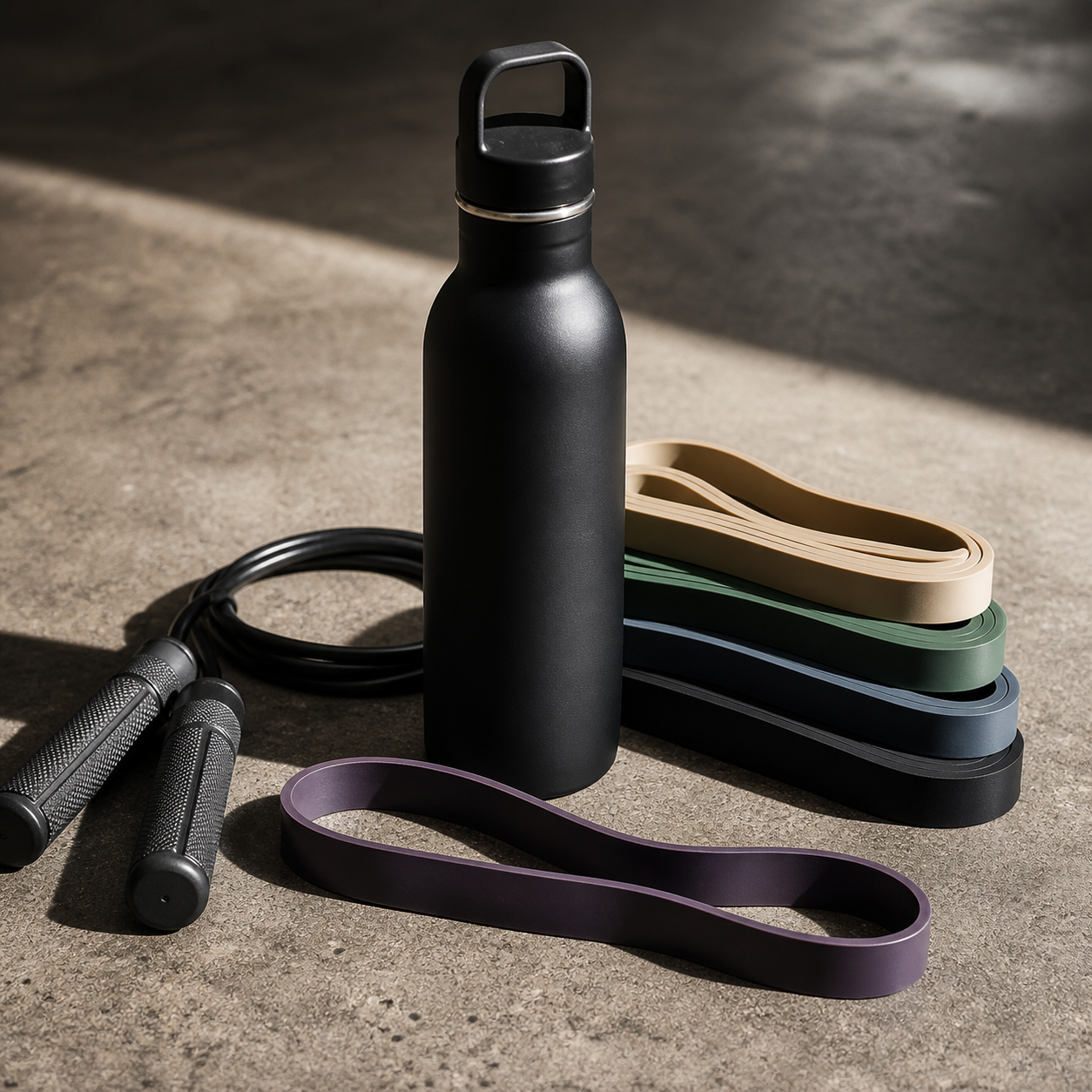
Fitness product photography has to communicate performance before any buyer reads a single spec. A protein shaker, a resistance band, or a set of weights needs to look like it belongs in the hands of someone who takes their training seriously — not like a lifestyle prop sitting on a clean shelf. The visual language of performance sports photography — dramatic contrast, strong directional lighting, industrial textures, and dynamic angles — communicates this quality instantly.
The category spans a wide spectrum: premium athleisure and lifestyle fitness brands use cleaner, more lifestyle-oriented photography; hardcore performance and sports brands use more dramatic, high-contrast imagery. Understanding where a product sits on this spectrum and matching the visual language accordingly is the most important skill in fitness product photography.
6 tips for fitness & sports product photography
Use dramatic side lighting for energy and form
Side lighting — a key light placed 90 degrees from the camera, at or slightly above the product — creates shadows that reveal form, texture, and three-dimensional shape. For fitness products, this adds visual energy and communicates that the product is built with precision. It's the difference between a weight that looks purposeful versus one that looks like a prop.
Dark, industrial surfaces communicate performance
Concrete floors, raw steel, rubber gym flooring, and dark matte surfaces communicate that this product is for working out, not for display. These surfaces ground fitness products in their natural environment and make them look purpose-built rather than consumer-grade. They also provide excellent contrast against colorful athletic products.
Show the product in use or as if just used
A water bottle with condensation forming on the outside. A gym bag with a towel slightly visible. A resistance band slightly stretched. These details of use make fitness products look like they're part of an active life rather than a product in a warehouse. 'Just used' details add credibility that elaborate lifestyle staging rarely achieves.
Use dynamic angles for dynamic products
Static, flat, symmetrical compositions read as calm and stable — the opposite of what fitness products should communicate. A slight tilt, a diagonal composition, or a low-angle looking slightly up communicates energy and movement. This is especially effective for products used in motion — running shoes, bands, bags, and activewear.
Include scale references for gym equipment
Weight plates, kettlebells, barbells, and resistance bands all have sizes that are difficult to judge from product photos. A hand holding the product, or the product photographed in context with known-size equipment, gives buyers the scale reference they need to avoid ordering the wrong size and leaving a negative review.
Match light temperature to brand positioning
High-performance, hardcore athletic brands use cooler, bluer light that reads as precision and technology. Lifestyle and athleisure brands use warmer light that reads as approachable and everyday. The difference is subtle but consistent — look at any major athletic brand's product photography and you'll see this pattern used deliberately.
Equipment and setup for fitness & sports photography
Camera: 50-85mm prime. Lighting: one hard or semi-hard light source (LED panel with no diffusion or minimal diffusion) for dramatic contrast — unlike most product categories, fitness benefits from harder light. A darker background (concrete, rubber mats, dark fabric) and a reflector card for shadow fill when needed.
Common mistakes to avoid
- Soft, spa-like lighting — makes performance products look gentle and low-intensity. Harder, more directional light communicates energy and performance far more effectively.
- White or pastel backgrounds for hardcore performance gear — they make the product look lifestyle rather than performance-grade to serious buyers.
- No scale reference for equipment — a kettlebell that could be 8kg or 32kg based on the photo will generate wrong-size returns and negative reviews.
Styles that work for fitness & sports
In noprompt.design, start with: Gradient Tech, Neon Dark, Lifestyle Flatlay. Each style is pre-tuned for this product category — no settings to adjust.
Try it free — upload your fitness & sports product now
Frequently asked questions
What makes fitness product photography look high-performance?
Three elements: dramatic directional lighting that creates shadow and form, dark industrial surfaces (concrete, rubber, steel) that communicate the product's intended environment, and dynamic angles that imply energy and movement. Products photographed with these elements look performance-ready; the same products in soft clean studio environments look like lifestyle props.
What background should I use for gym equipment?
Dark surfaces work best for most performance equipment: concrete textures, dark rubber flooring, matte black or dark grey surfaces. They create contrast with colorful athletic products and communicate the gym environment. For lifestyle-positioned fitness products (yoga, pilates, wellness), warmer, lighter surfaces — light wood, linen — are more appropriate.
How do I photograph small equipment like resistance bands?
Show the product in use, or as if it just was: a band slightly stretched, a grip slightly held, a tube coiled as it would be after use. This communicates function in a way a static product shot cannot. Include one technical product shot (clean, flat, showing all components) alongside the in-use imagery for complete listing coverage.
Should fitness product photography include athletes?
For brand-level photography, yes — athletes using products are highly effective for aspirational brand positioning. For marketplace listings, a clean product shot converts better than lifestyle photography as the primary thumbnail image. The ideal listing uses a clean hero product shot as the thumbnail, with lifestyle and athlete shots as secondary images.
Can I take professional fitness product photos without a camera?
Yes — performance is a lighting and angle problem, not a gear problem, and a phone handles both. Work near a large window or use one LED panel placed to the side and slightly above so the shadows reveal the product's form, and shoot on a dark surface (concrete, rubber mat, dark fabric) for the contrast that reads as performance. Add one 'just used' detail — condensation on a bottle, a band slightly stretched — and shoot from a slightly low or diagonal angle so the product looks active rather than static. Keep the light cool if the brand is performance-positioned and warmer for athleisure. For consistent studio-grade results across a whole catalog — clean dark backgrounds, dramatic light and the same look on every SKU — AI product photography tools like noprompt.design turn an ordinary phone photo of a kettlebell, shaker or resistance band into a professional product image without writing a single prompt.
How do I photograph fitness equipment for an online store?
Fitness buyers scan for two things: build quality and size, so give them both. Lead with a clean hero shot of the product on the same dark or industrial surface you use across the catalog, then add one close-up of the detail that separates it from cheap alternatives — welded seams, rubber grip, gauge of steel — and one scale shot (in a hand, beside a known-size plate or kettlebell) since wrong-size orders are the biggest source of returns in this category. Amazon and eBay listings need the product on a pure white background with accurate color for the lead image; a Shopify or DTC store should keep one background and light setup across every SKU so the range reads as a brand rather than a reseller; and Etsy or handmade sellers can lean into warmer, lifestyle styling for athleisure and studio gear.
How do I edit fitness product photos to look professional?
Edit for form and accuracy, not for gloss. Lift the shadows just enough to keep detail in dark rubber and black metal without making the scene look flat, keep the contrast that gives the product its energy, and make sure brand colors on apparel and equipment stay true rather than going neon. Remove dust, fingerprints and scuffs on surfaces, and clean up stray reflections on chrome, steel and glass. Match exposure and background tone across every image in the listing so the line looks professionally produced, and resist over-sharpening — crisp detail on a rubber grip or machined edge should look real, not crunchy.
Related deep-dive: How to take product photos at home — the home-gym budget setups that work for fitness gear.