Product Photography for Wellness & Supplements
Wellness and supplement product photography has to overcome a fundamental trust problem. Buyers can't verify a supplement's quality or efficacy before purchasing — they're making a decision about what they put in their body based on packaging, brand signals, and visual presentation. Photographs that look clean, natural, and credible help overcome this trust deficit. Photographs that look cheap, cluttered, or inconsistent actively harm conversion in a category where trust is the purchase currency.
The category splits between clinical/science-backed positioning (cleaner, whiter, more precise visuals) and natural/whole-food positioning (warmer, greener, more botanical visuals). Both can be done well, but they require different approaches. The most common mistake is mismatching the visual aesthetic to the brand's actual positioning.
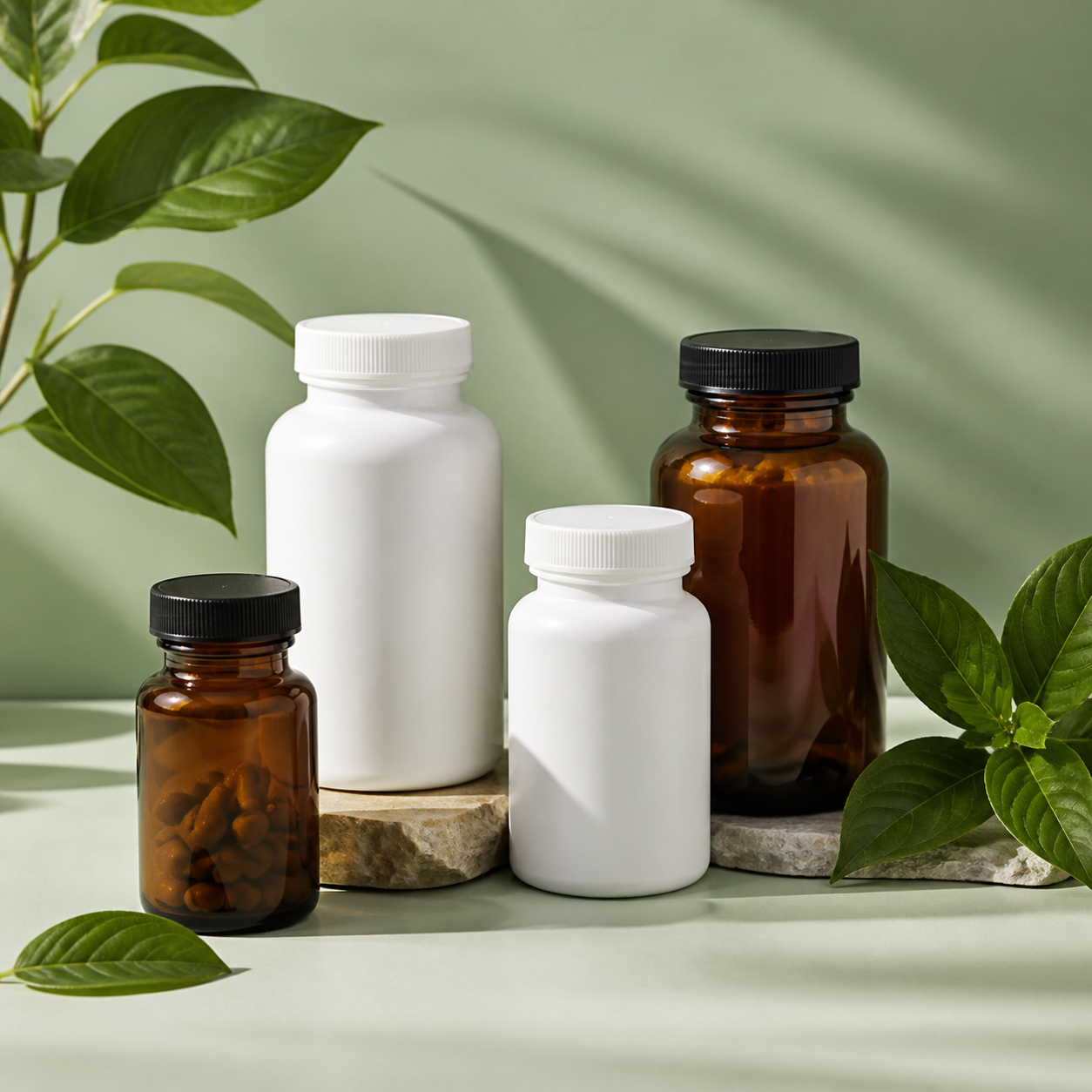
6 tips for wellness & supplements product photography
Match visual language to the supplement's positioning
A probiotic positioned as a clean-science product needs bright, clinical, precise photography — white backgrounds, clean lines, controlled light. The same product positioned as a 'natural gut health' supplement needs botanical elements, warm light, and organic-looking surfaces. Photography should reinforce the positioning, never contradict it.
Keep labels completely readable
Supplement buyers read labels before purchasing — ingredients, dosage, certifications. A hero shot where the label is partially obscured or in shadow fails the primary use case. Shoot a flat, front-facing label shot as one of the core images in every supplement listing without exception.
Botanical props must be relevant, not random
Whole ingredients as props — ashwagandha root beside a stress supplement, fresh ginger beside a digestion product — communicate what the supplement actually contains. Random botanical decoration reads as mere decoration rather than ingredient communication and adds visual noise without adding information.
Shoot on a consistent natural surface for the whole line
A supplement brand that shoots every product on the same light wood surface with the same soft-light quality looks like a considered brand. Inconsistency across a product line reads as a brand without a clear identity, which increases buyer hesitation significantly in a high-trust category.
Include a glass of water or measuring spoon for context
Supplement buyers think about how to take the product. A protein powder shot with a scoop and a glass of water answers the 'how do I use this?' question visually. A capsule supplement beside a glass of water communicates the daily routine. These context elements increase purchase confidence by making the product feel immediately usable.
Highlight certifications visually when relevant
Third-party certifications (non-GMO, organic, GMP certified) are purchase drivers in the supplement category. If the packaging carries certifications, make sure they're visible in at least one product shot. A close-up of the certification badge can be a valuable secondary image for premium-positioned supplements.
Equipment and setup for wellness & supplements photography
Camera: 50-85mm prime for clean, undistorted product shots. Lighting: daylight-balanced LED softbox (5500K) for clinical positioning, or warm window light for natural positioning — the choice signals the brand promise. Backgrounds: white foam core, light marble, or light wood depending on brand positioning. Botanical props: real whole ingredients when possible.
Common mistakes to avoid
- Hiding the label — supplement buyers make decisions based on label information. A shot where the label isn't fully readable fails the most important use case.
- Random botanical props that don't match the ingredients — they look decorative rather than informative and miss the opportunity to communicate what the product actually contains.
- Mismatching visual aesthetic to product positioning — clinical product with loose natural styling, or natural product with studio-white clinical look, creates distrust.
Styles that work for wellness & supplements
In noprompt.design, start with: Clean White Studio, Minimal Pastel, Natural Light Window. Each style is pre-tuned for this product category — no settings to adjust.
Try it free — upload your wellness & supplements product now
Frequently asked questions
What backgrounds work for supplement photography?
It depends on positioning. For clean, science-backed supplements: white, light marble, or light grey — clinical and precise. For natural, botanical-positioned supplements: light wood, unbleached linen, or concrete — organic and grounded. For premium lifestyle supplements: marble or matte black — luxury and aspirational. The background should reinforce the brand promise.
Should supplement photos include people?
Lifestyle shots with a person using the product (mixing a powder, taking capsules as part of a morning routine) are effective secondary images. They're not necessary for marketplace hero images, where a clean product shot converts better. For brand websites and social, lifestyle context is very valuable for connecting emotionally with buyers.
How do I photograph supplements to build trust?
Clear label visibility, clean surfaces, consistent lighting across the product line, and relevant botanical props that match the ingredients. Trust in this category comes from visual coherence and precision — buyers assume a brand that photographs its products carefully also manufactures them carefully. Inconsistency or sloppiness is transferred unconsciously to quality assumptions.
What lighting temperature for wellness products?
For natural-positioned supplements: warm light (3500-4500K) with soft shadows — it reads as natural and organic. For clinical/science-backed supplements: cooler daylight (5500K) with crisp, precise lighting — it reads as medical-grade and research-backed. The lighting temperature is a surprisingly powerful signal in this category.
Can I take professional supplement product photos without a camera?
Yes — the camera is no longer the bottleneck. What sells supplements is clarity and trust, not sensor size: a modern phone in soft, even window light, with the label square to the lens and fully legible, captures everything a buyer needs before purchase. Stand the bottle on a clean surface (white, light marble or unbleached linen) with a white card opposite to fill the shadow side, and take one straight-on label shot plus one angled shot so the packaging reads as a considered brand. Keep the light neutral so white capsules and pale powders stay true rather than going yellow. For consistent studio-grade results across a whole catalog — clean backgrounds, readable labels and the same light on every SKU — AI product photography tools like noprompt.design turn an ordinary phone photo of a supplement bottle into a professional product image without writing a single prompt.
How do I photograph supplements for an online store?
Supplement buyers read the label before they buy, so lead with a fully legible, straight-on front shot on a clean background, then add one ingredient/context shot (whole ashwagandha root, a scoop of powder, a glass of water) so what is actually in the product is obvious at a glance — the single strongest trust driver in this category. Keep the same surface, light temperature and palette across every SKU so the range reads as one considered brand rather than a mixed shelf. Etsy and handmade sellers should favor warmth and natural textures for botanical positioning, while Amazon listings need a pure white background and true-to-life color. For a Shopify or DTC store, decide clinical (cool, precise, white) versus natural (warm, botanical) positioning once and apply it consistently across the whole line.
How do I edit supplement product photos to look professional?
Edit for accuracy and consistency, not for gloss. Set white balance so white capsules, pale powders and off-white packaging stay neutral rather than shifting yellow or blue — color drift in this category reads as a quality problem. Keep the label crisp and fully readable: sharpen text, remove dust and fingerprints, and never blur or retouch a certification badge. Preserve real texture in capsules, tablets and powder so they look like the product rather than a plastic render, and match exposure and background tone across every image in the listing so the line looks professionally produced. If a product ships in multiple sizes, shoot and edit them together so scale and color stay consistent across the range.
Related deep-dive: How to take product photos without a camera — a phone plus window light is enough for most supplement and wellness SKUs.