Product Photography for Home & Decor
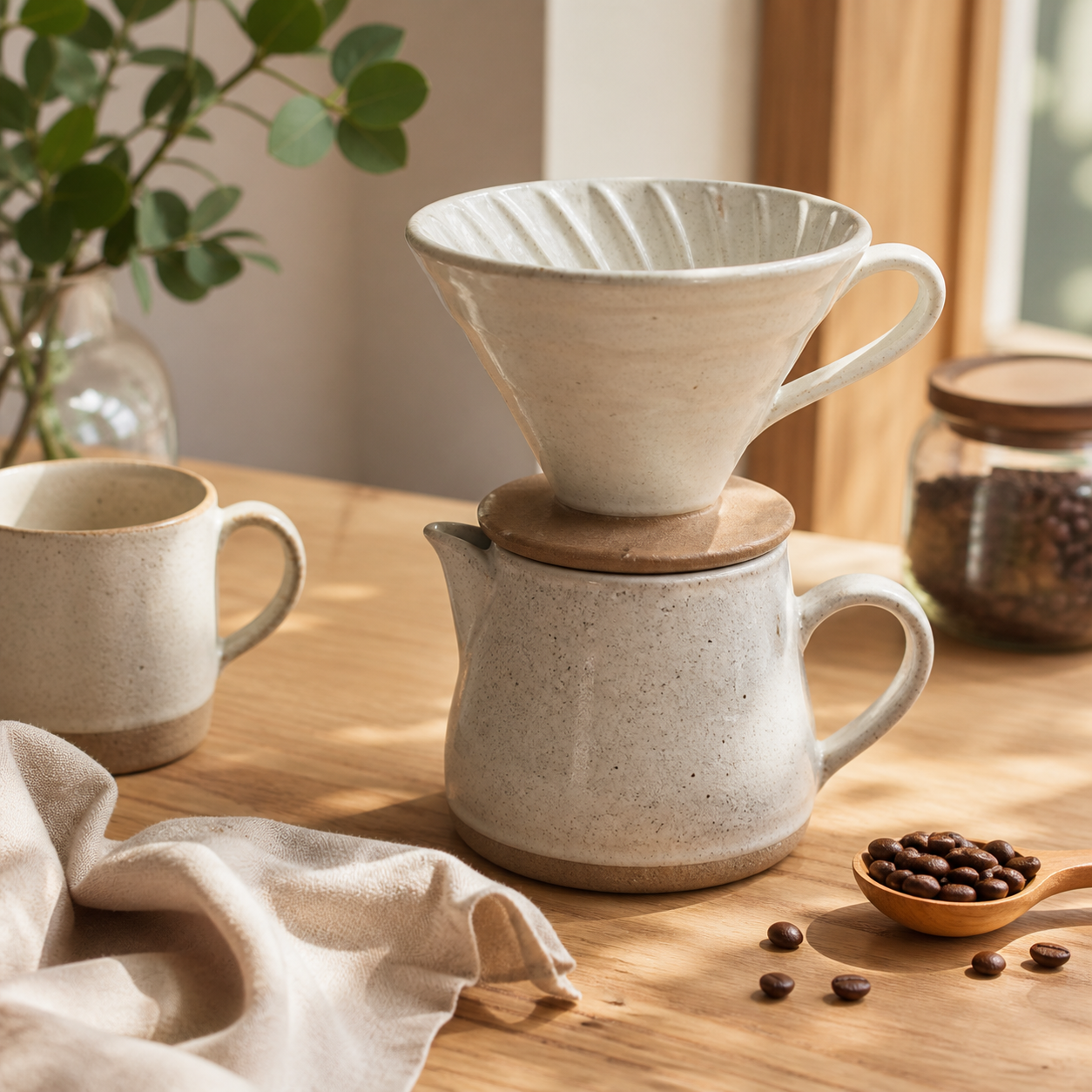
Home decor product photography has one overriding goal: help the buyer imagine the product in their own home. A candle photographed in a sterile white studio looks like a product. The same candle on a warm wooden surface with soft window light and a few autumn leaves looks like something the buyer wants in their living room tonight.
The category rewards context and warmth above almost everything else. Buyers aren't choosing between products — they're imagining how their home will feel with this object in it. Lighting that's too harsh or too cool, backgrounds that are too clinical, or compositions that are too empty all undermine that imagination. The best home decor photography makes the buyer feel something before they read a single word.
6 tips for home & decor product photography
Soft window light is the category standard
Diffused natural light from a large window gives home decor products a warmth that studio lighting rarely matches. The quality of light — soft, directional, with gentle shadows — mimics the conditions the product will actually be used in. Shoot within a few feet of a large north or east-facing window for the most consistent, controllable results.
Add one lifestyle element, not five
The most common mistake in home decor photography is over-styling. One complementary prop — a plant, a book, a folded textile — adds context and warmth. Five props compete with the product and make the shot feel like a cluttered catalog page. Every element in the frame should either support the product or be removed.
Match the palette to the product's target customer
Warm neutrals — cream, warm white, oak, linen — appeal to the majority of home decor buyers and work across most price points. Cooler, more minimal palettes suit Scandinavian and contemporary design. Before choosing backgrounds, research where the product sells best and match the visual language of that customer.
Shoot at the angle buyers see the product in use
A table lamp is seen slightly from above. A rug is seen from above or at a standing angle. A vase is seen at eye level. Shooting from the angle the buyer will actually experience the product makes it much easier for them to visualize it in their space. Counter-intuitive angles create visual confusion.
Overcast outdoor light is a free softbox
An overcast sky is the world's largest softbox. Outdoor shooting on an overcast day gives beautifully soft, even light with no harsh shadows — ideal for textiles, ceramics, and any product that benefits from true color reproduction. It's free, consistent, and replicable across a full product line.
Include a scale reference for anything that varies in size
Home decor buyers frequently buy the wrong size. A vase that looks table-height in isolation might be six inches tall. Including a familiar reference — a hand, a book, or adjacent furniture — lets buyers judge scale without measuring. Scale errors are the most common reason for returns in the home decor category.
Equipment and setup for home & decor photography
Camera: 35-50mm lens for a natural, perspective-accurate view of objects in space — avoid ultra-wide angles that distort room scenes. Lighting: large window as primary source, with a white foam board reflector card on the opposite side to fill shadows. Backgrounds: wood surfaces, linen fabric, concrete, or a simple wall with the right color.
Common mistakes to avoid
- Cool or blue-tinted light — makes warm-material products like wood, ceramic, and linen look cold and clinical. Keep color temperature warm in the 4000-5500K range.
- Over-propping — too many objects compete with the product. One hero product, one to two supporting props maximum, always.
- Shooting from unflattering angles — a rug needs to be seen from above; a lamp from the side. Shoot from the natural viewing angle for each product type.
Styles that work for home & decor
In noprompt.design, start with: Natural Light Window, Warm Neutral Lifestyle, Rustic Artisan. Each style is pre-tuned for this product category — no settings to adjust.
Try it free — upload your home & decor product now
Frequently asked questions
What lighting works best for home decor?
Soft, warm natural light from a large window is the gold standard. It matches the conditions the product will actually be used in and gives warmth that LEDs rarely replicate perfectly. If shooting with artificial light, use a large softbox with a warm bulb (3000-4000K) and avoid overhead downlighting, which creates unflattering harsh shadows.
How many lifestyle props should I include?
One to two maximum. The product is the hero. Props provide context and scale, not a full room scene. A plant, a folded linen throw, or a book is enough. If you find yourself arranging more than two props, remove one and see if the shot gets better — it usually does every time.
How do I photograph rugs and large textiles?
Overhead top-down shots are essential for rugs, quilts, and large throws — they show the full pattern and scale. Add a floor-level angle that shows texture, pile height, and edge detail. Include a furniture piece (chair leg, table corner) in at least one shot for scale. Natural outdoor light on an overcast day gives the best color accuracy.
What backgrounds work for home decor products?
Wood surfaces are the most versatile — they add warmth without competing with most product colors. Concrete and stone work for minimal and industrial-style products. Linen and cotton fabric add softness for ceramics and candles. White or cream sweep paper gives a clean base when props provide all the environmental warmth you need.
Can I take professional home decor product photos without a camera?
Yes — the camera is not what makes home decor products sell. Buyers are imagining the object in their own room, so warm, diffuse light and a believable setting matter far more than sensor size. A modern phone placed near a large window, with a white foam board opposite to fill the shadows, on a wooden table or linen surface, captures exactly what a buyer needs. Keep the frame simple and tap to meter on the product's mid-tone so light wood and cream ceramics don't wash out against the background. For a full catalog of consistent, studio-grade images, AI product photography tools like noprompt.design turn an ordinary phone photo of a vase, lamp or candle into a clean, professionally lit product shot without writing a single prompt.
How do I photograph home decor products for an online store?
Home decor buyers shop by imagining the object in their space, so lead with a clean hero shot on a consistent warm-neutral background, then add one in-situ shot (the lamp on a console, the rug under a chair) so scale and mood are obvious — scale confusion is the top reason for returns in this category. Keep the same light, palette and surface across every SKU so the range reads as one brand rather than a reseller's shelf. Etsy and handmade sellers should favor warmth and honesty — real wood, linen and natural daylight, one or two props maximum — while Amazon listings need the product on an unambiguous background with accurate color. For Shopify or DTC stores, a single warm-neutral palette applied across the whole line is what makes a collection feel premium.
How do I edit home decor product photos to look professional?
Edit for warmth and color truth, not for drama. Set white balance so oak, linen and terracotta read as they do in the room rather than yellow-shifted or blue-cast, lift shadows gently so the frame stays airy without crushing detail, and keep a soft, directional falloff rather than flattening the light. Remove stray dust, wires and clutter, but preserve texture — over-smoothing makes wood and woven fabric look synthetic and undercuts the quality signal home decor buyers are looking for. Keep every image in the listing on the same background tone and exposure so the set looks professionally produced and the product, not the editing, is the hero.
Related guide: Art & Print Product Photography — wall art and prints are the decor pieces buyers judge hardest on color accuracy.