Product Photography for Stationery & Gifts
Stationery and gift product photography occupies a distinct middle ground: the buyer is usually purchasing for someone else, which means they're imagining a third party's reaction as much as their own. This shapes how the photography should work — it needs to look aspirational and gift-worthy, not just functional and accurate.
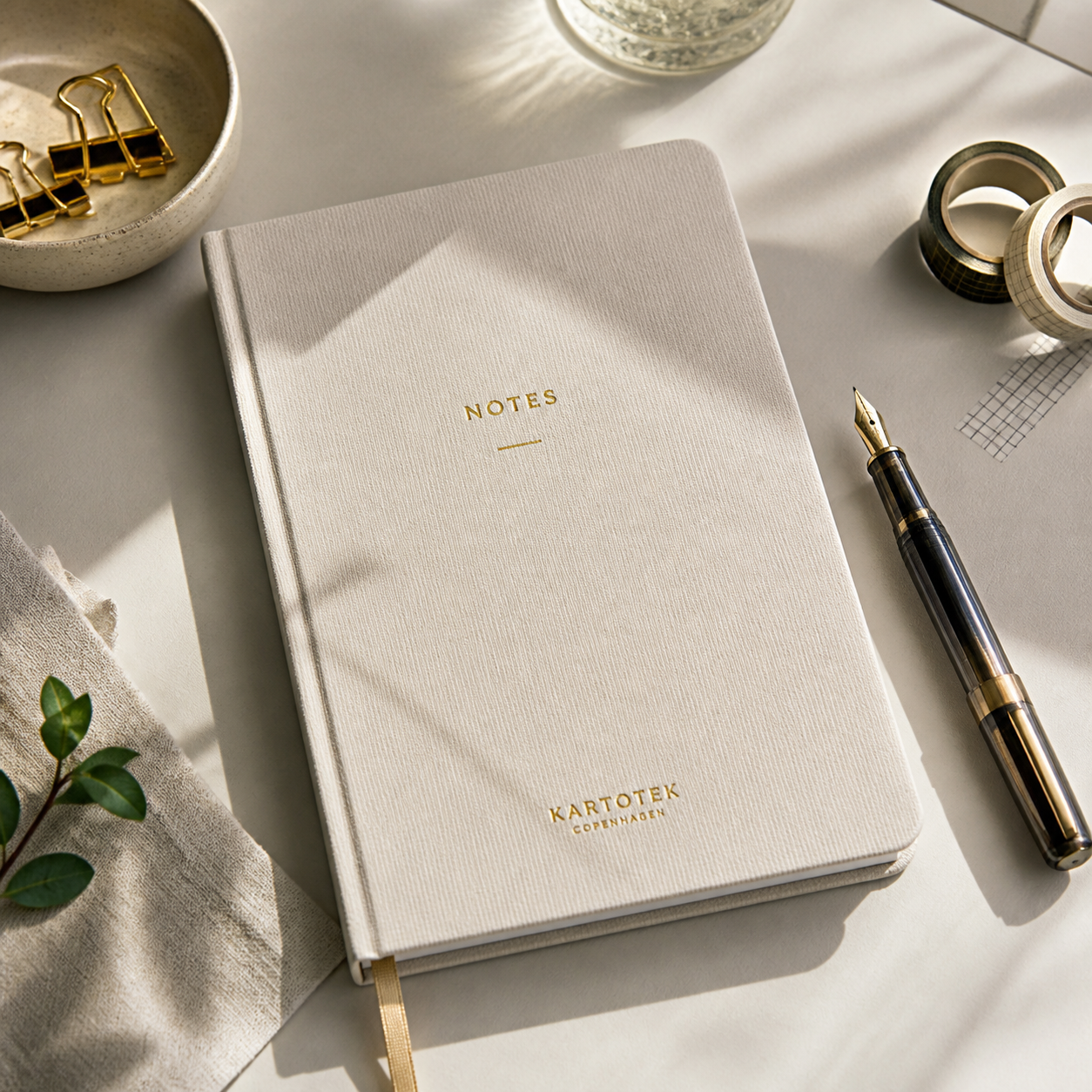
The category has a strong aesthetic tradition: clean, minimal desk setups with soft morning light, warm neutral surfaces, and one or two complementary props that suggest a productive, organized life. This look communicates that the product is quality enough to give and receive as a gift. Products that photograph in a busy or purely utilitarian way struggle to compete.
6 tips for stationery & gifts product photography
Soft morning light reads as productive and premium
Morning light has a warmth and direction that feels organized and aspirational. Positioning stationery products near a window, shot in morning light or with a warm LED at a 45-degree angle, creates the 'beautiful workspace' aesthetic that stationery buyers consistently respond to and aspire to recreate.
Show texture: paper grain, pen barrels, ribbon details
Stationery buyers are detail people — they care about paper weight, pen grip, ribbon quality, and cover texture. Close-up shots that reveal these details build purchase confidence more effectively than wide shots that show everything but reveal little. A close-up of paper grain in a notebook's open spread can be a decisive image.
Flat lay works exceptionally well for this category
Stationery products are inherently two-dimensional in use — notebooks open on a desk, pens arranged beside a planner — which means the top-down flat-lay angle replicates how the buyer will actually experience the product. A clean flat lay with intentional negative space is the most natural format for this category.
Gift sets need a hero shot and an exploded view
For gift sets with multiple components, shoot a hero image with everything arranged together, then an exploded flat lay showing every component separately so buyers can see exactly what they're getting. This reduces mental effort and dramatically reduces 'not as described' returns for multi-item sets.
Use consistent backgrounds across a product line
Stationery buyers often purchase multiple products from one brand. A catalog where every product is shot on the same warm white background with the same light quality feels like a considered, quality brand. Mixed backgrounds across a product line undermine brand coherence and reduce the perception of quality.
Minimal props only — one or two maximum
A single plant, a coffee mug, or a small brass accessory beside a notebook is enough context. More than two props pulls attention away from the product and makes the shot feel like an interior design photo rather than a product listing. The product should occupy at least 60% of the frame area.
Equipment and setup for stationery & gifts photography
Camera: 50mm prime for natural perspective without distortion. Lighting: a north-facing window or a daylight-balanced LED at 45 degrees from the front or side. A large white reflector card on the shadow side fills softly. Backgrounds: white foam core, warm white art paper, light gray paper rolls, or a natural wood surface. A shooting board makes consistent flat lays easy.
Common mistakes to avoid
- Too many props competing with the product — stationery photography should feel minimal. More than two props is almost always too many.
- Shooting on a real desk with visual clutter in the background — use a clean backdrop or a controlled surface without distraction.
- Not showing interior pages for notebooks and journals — buyers want to see the paper quality. An open spread shot is essential for any bound product.
Styles that work for stationery & gifts
In noprompt.design, start with: Clean White Studio, Minimal Pastel, Warm Minimalist. Each style is pre-tuned for this product category — no settings to adjust.
Try it free — upload your stationery & gifts product now
Frequently asked questions
Flat lay or upright for stationery?
Both serve different purposes. Flat lay is the primary format for stationery — it replicates how products are actually used and works especially well for multi-item sets and planners. Upright or propped shots work for hero images of notebooks and pen sets where you want to show the cover design and spine. A complete listing needs both.
How do I photograph a pen to look premium?
A flat lay on a natural wood or marble surface with one or two complementary objects works well. An upright shot leaning against a notebook with a clean soft background is effective. A detail shot showing the barrel, nib, or grip material close-up builds purchase confidence significantly. For sets of multiple pens, arrange with deliberate spacing in a flat lay.
What background works for stationery and planners?
Warm white or cream is the most versatile — it's clean, consistent, and lets the product colors speak. Natural wood adds warmth and a desk-at-home feel that many stationery buyers love. Marble suits premium brands. Avoid very dark backgrounds — stationery tends to have light, delicate aesthetics that clash with dark surfaces.
How do I photograph a gift set attractively?
Three shots minimum: a hero image with everything arranged together, an exploded flat lay showing every component separately, and a packaging shot showing the box or wrapping as the buyer will receive it. The packaging shot is often overlooked but is critical for gift-intent purchases — buyers need to know it will look good when given.
How do I photograph stationery for Etsy?
Etsy buyers respond to clean, natural flat lays in soft daylight on a consistent background. Shoot notebooks, planners, and pen sets on the same warm white or cream surface with one or two minimal props so the whole shop reads as a considered brand. Always include an open-spread shot of bound products so buyers can see the paper quality, and add a scale reference for planners and journals.
How do I photograph paper products without glare?
Paper is prone to hotspots from direct light. Use diffused light — a sheer-curtained window or softbox — and position it at roughly 45 degrees instead of straight down. For glossy covers, rotate the product or the light until the reflection moves off the cover. A polarizing filter removes most paper glare in-camera.
How many photos does a stationery listing need?
Five is a solid minimum: hero, open spread, texture close-up, flat lay with one prop, and a scale or packaging shot. Gift sets need an exploded flat lay showing every component. Stationery buyers are detail-oriented — the open spread and texture close-ups are usually the images that convert them.