Product Photography for Candles & Fragrance
Candle and fragrance product photography has to do something photography fundamentally cannot: communicate a smell. Everything in the photograph — the light, the color, the props, the atmosphere — works as a proxy for the sensory experience the product actually delivers. This is why candle photography is so heavily atmospheric and why the techniques that work here are so different from standard product photography.
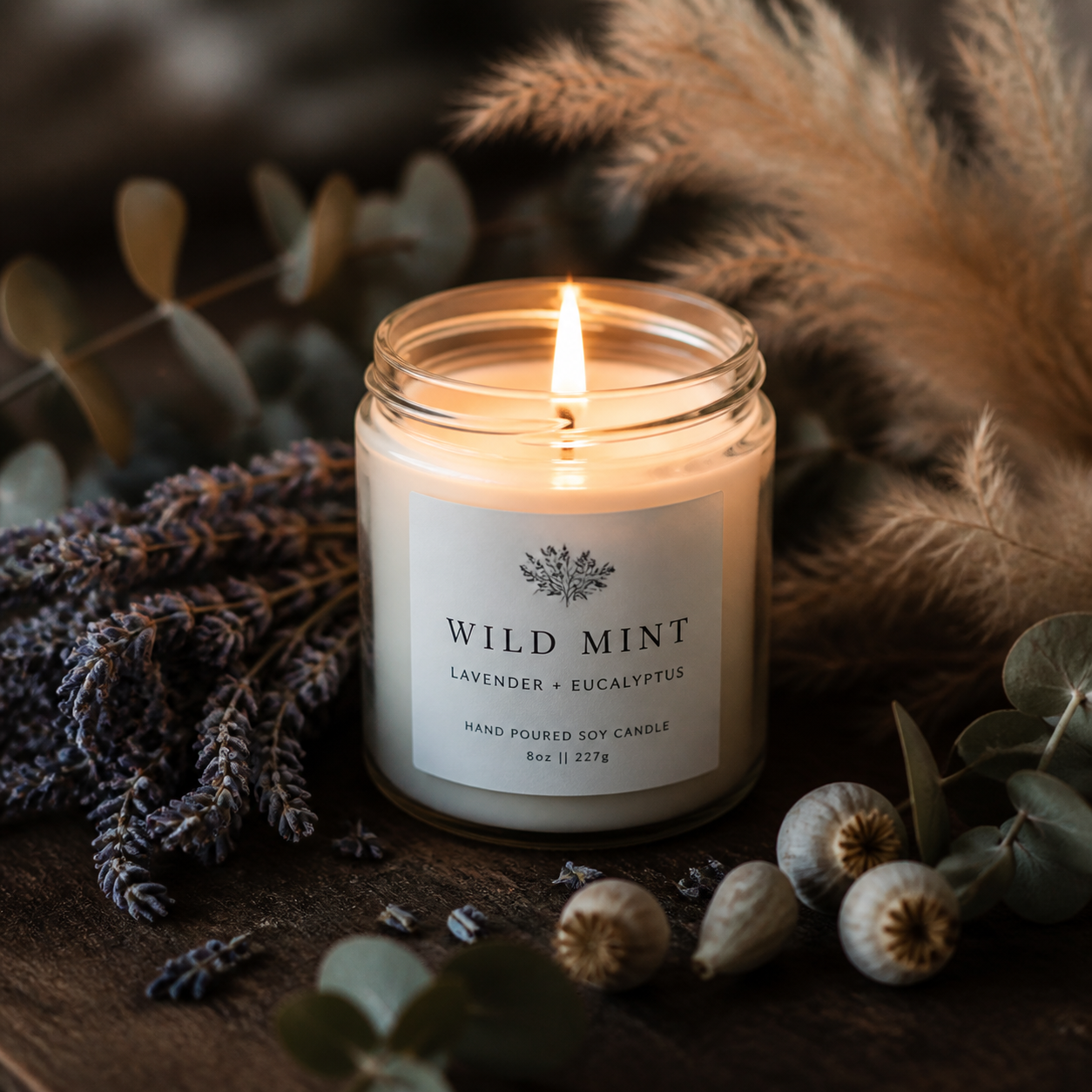
A lit candle photographed with warm flickering light, surrounded by botanical elements that hint at the fragrance, placed on a dark richly textured surface creates an emotional atmosphere that triggers the imagination. The buyer doesn't smell anything — but they feel something. That feeling is what drives the purchase.
6 tips for candles & fragrance product photography
Always photograph the candle lit
An unlit candle is a jar of wax. A lit candle has warmth, glow, and movement — and it tells the buyer what the actual experience of burning this candle will be like. The flickering light from a flame also creates a beautiful, dynamic light quality on surrounding surfaces that no studio light exactly replicates.
Use dark, rich backgrounds for atmospheric candles
Dark wooden surfaces, dark stone, matte black fabric, and dark slate provide the contrast that makes a lit candle look dramatic and warm. The candle's flame becomes the hero light source in the image, creating a mood that clean white backgrounds cannot achieve. Match the background darkness to the fragrance story — darker for evening scents, lighter for fresh ones.
Match props to the fragrance profile
Props are not decoration — they're a visual description of the scent. A vanilla and sandalwood candle should be surrounded by warm, woody materials. A eucalyptus and mint candle should have fresh botanical elements. A rose candle should have dried petals. When props match the fragrance, the photograph creates synesthesia — buyers almost feel they can smell what they're seeing.
Get close for texture shots of the vessel
The vessel (jar, tin, or pot) is a significant part of the product's perceived value. A close-up shot showing the texture of the ceramic, the quality of the glass, or the embossed label communicates craft and quality that the full product shot can't capture. Include at least one close-up focused on the vessel's material quality.
Show the candle at multiple stages
Photographs before it's lit (pristine), while burning (atmospheric flame shot), and slightly used (with a small wax pool forming) together tell the complete story of the product's experience. The 'slightly used' shot is counterintuitive but effective — it makes the product feel real and attainable, not like a precious display object.
Consider shooting at dusk or blue hour for outdoor shots
The natural light quality at dusk — cool sky, warm lights beginning to appear — creates atmospheric quality that's expensive and difficult to replicate in a studio. For premium candle brands, a dusk outdoor setting with the candle lit can produce remarkable images that stand out in crowded marketplace listings.
Equipment and setup for candles & fragrance photography
Camera: any system with a 50mm prime; low-light capability matters here since you'll often shoot in dim conditions with candle as the key light. Lighting: the candle flame as key light, with a small LED panel hidden behind the product to prevent complete darkness on the label side. Backgrounds: dark wood boards, slate sheets, dark linen or velvet fabric.
Common mistakes to avoid
- Only photographing the candle unlit — an unlit candle has none of the atmosphere that drives candle purchases. Always include a lit shot as the hero.
- Props that don't match the fragrance — eucalyptus candle with rose petals creates a visual-olfactory mismatch that undermines trust in the brand.
- Bright, clean white backgrounds — they're the opposite of the atmospheric feeling candle buyers are seeking. Reserve white for the product-only detail shot.
Styles that work for candles & fragrance
In noprompt.design, start with: Neon Dark, Rustic Artisan, Warm Neutral Lifestyle. Each style is pre-tuned for this product category — no settings to adjust.
Try it free — upload your candles & fragrance product now
Frequently asked questions
Should candle photos show a lit flame?
Yes — always include at least one lit candle shot as a hero image. Unlit candles look like novelty jars. Lit candles communicate warmth, ritual, and sensory experience in a way that an unlit product shot simply cannot. The flame is the most important element in candle photography.
What props work best for candle photography?
Props should match the fragrance profile: dried botanicals and herbs for floral and herbal scents; dark wood and leather for sophisticated evening fragrances; pine cones and evergreen for seasonal scents; cotton branches for clean and fresh. Keep to two or three props maximum. The candle should occupy at least half the frame.
What background makes candles look premium?
Dark, rich surfaces: reclaimed wood, dark marble, slate, matte black linen. The darkness creates contrast that makes the candle's glow pop and gives the image an atmospheric, editorial quality. For daylight product shots (clean, label-forward), white or marble work, but the dark atmospheric shot is usually the conversion hero for candle listings.
How do I photograph a lit candle without the flame blowing out?
Shoot in RAW and expose for the flame, accepting that surrounding areas will be darker — then lift shadows in post. Alternatively, expose for the overall scene and composite a separately exposed frame of the flame. In practice: place the camera on a tripod, set ISO low (200-400), and use negative exposure compensation to prevent the meter from brightening the entire image.