What is the best lighting for product photography at home?
Window light. A large window with soft, diffused daylight is the best lighting you can use at home — it's free, it's soft, it's directional, and it flatters every product category. Place the product within two to three feet of the window, add a white reflector on the shadow side, and shoot in daylight hours. If you need more power or consistency, a basic LED softbox kit ($60-100) replicates window light on demand. Avoid overhead room lights as your main source — they create harsh downward shadows and mixed color temperatures.
Window light: the free studio
A north or east-facing window gives soft, consistent, directional light for most of the day. West and south windows work too — just diffuse direct sun with a sheer curtain or white sheet. The product should sit close to the window (two to three feet) so the light wraps around it, with the window to the side at roughly 45 degrees.
Window light's one weakness is consistency: it changes with clouds and time of day. Shoot the whole catalog in one session, or move to artificial light if you need repeatability.
The reflector: the highest-ROI accessory
A white poster board or foam core ($3-8) on the shadow side of the product bounces window light back into the dark side, cutting contrast and revealing detail. This one $5 item does more for home product photos than a $300 light. Black foam core does the opposite — it deepens shadows when you want drama.
Artificial light: when window light isn't enough
A basic two-softbox LED kit ($60-120) replicates window light on demand and stays consistent at any hour. Look for: daylight-balanced (5000-5500K) LEDs, softboxes 60cm or larger, and continuous light (not flash) so you can see exactly what the phone will capture.
If you already have a ring light, use it as fill, not as the main light — ring lights create flat, circular reflections that look amateur on glass and metal.
Lighting by category, quick reference
Jewelry: large diffused source, macro-friendly, reflectors everywhere (metal is a mirror).
Beauty/glass: backlight for glow, large side softbox for the label, black cards for edges.
Food: warm directional light (3500-4500K) to make textures appetizing.
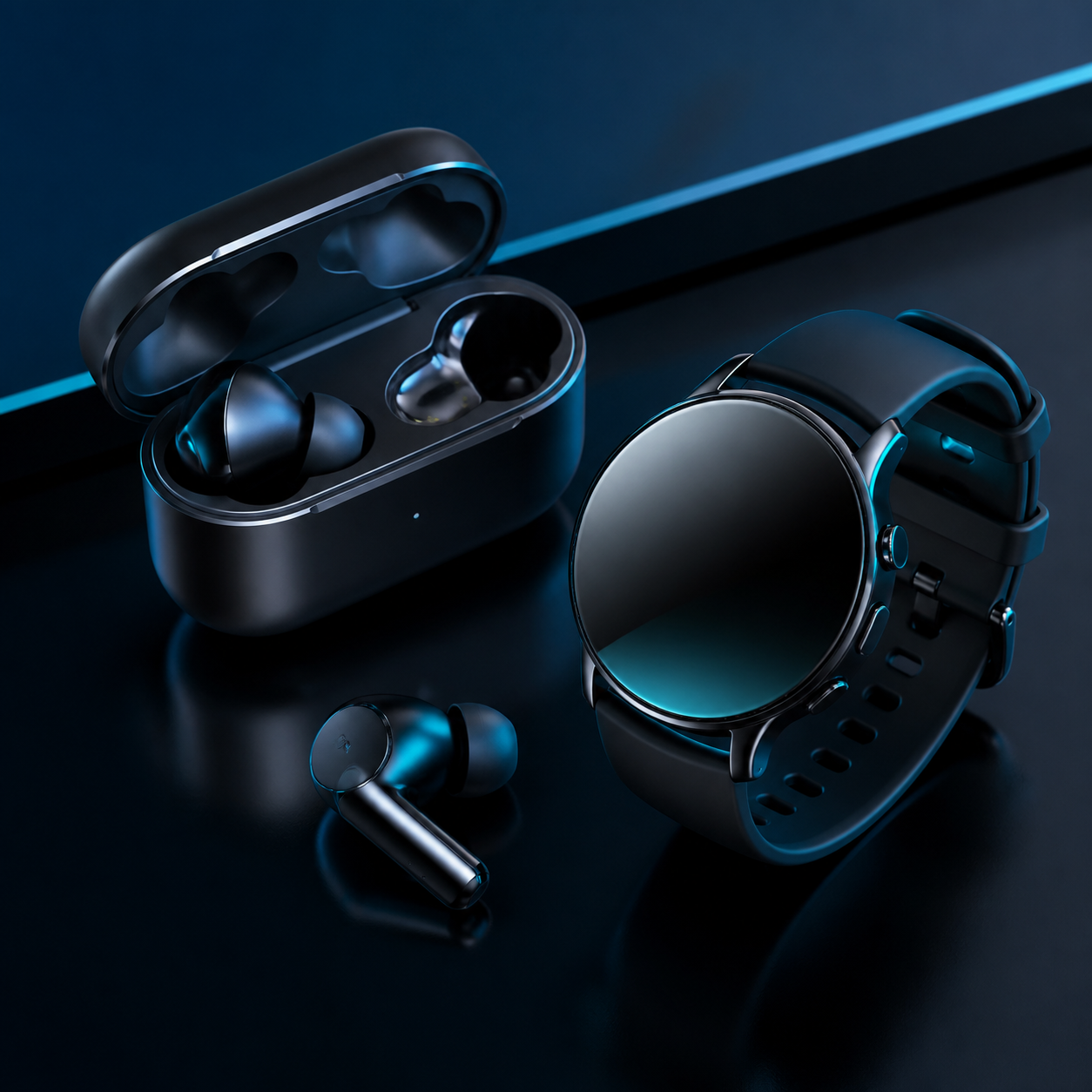
Tech: side light plus a rim light for machined edges, dark gradient background.
Apparel: side light at 45 degrees to reveal fabric weave and texture.
Frequently asked questions
Is a ring light good for product photography?
As a main light, no — ring lights create flat, even illumination and visible circular reflections on glass, metal, and glossy packaging. As a fill light, fine. The best budget setup for products is a window plus a white reflector, or a softbox kit.
Can I use my room's overhead light?
Only as a last resort. Overhead lights create harsh downward shadows and mixed color temperatures (your room light plus window light produces yellow-green whites). Turn off overheads, shoot near a window, and let daylight be your key light.
What's the cheapest lighting setup that looks professional?
Under $15: window + two white poster boards (background + reflector). Under $100: add a two-softbox LED kit for consistent light at any hour. That second tier is where home product photos start looking genuinely professional — soft, even, repeatable light.