How to photograph glass bottles without glare?
Backlight the bottle and use large, diffused lights positioned so their reflections fall outside the glass. Place a light directly behind the bottle so light passes through and makes the liquid glow, add a large softbox or window light from the side for the label, and position a black card on the opposite side to create a clean dark edge. Glare on glass is a reflection problem — solve it by controlling what the glass reflects, not by editing after the fact.
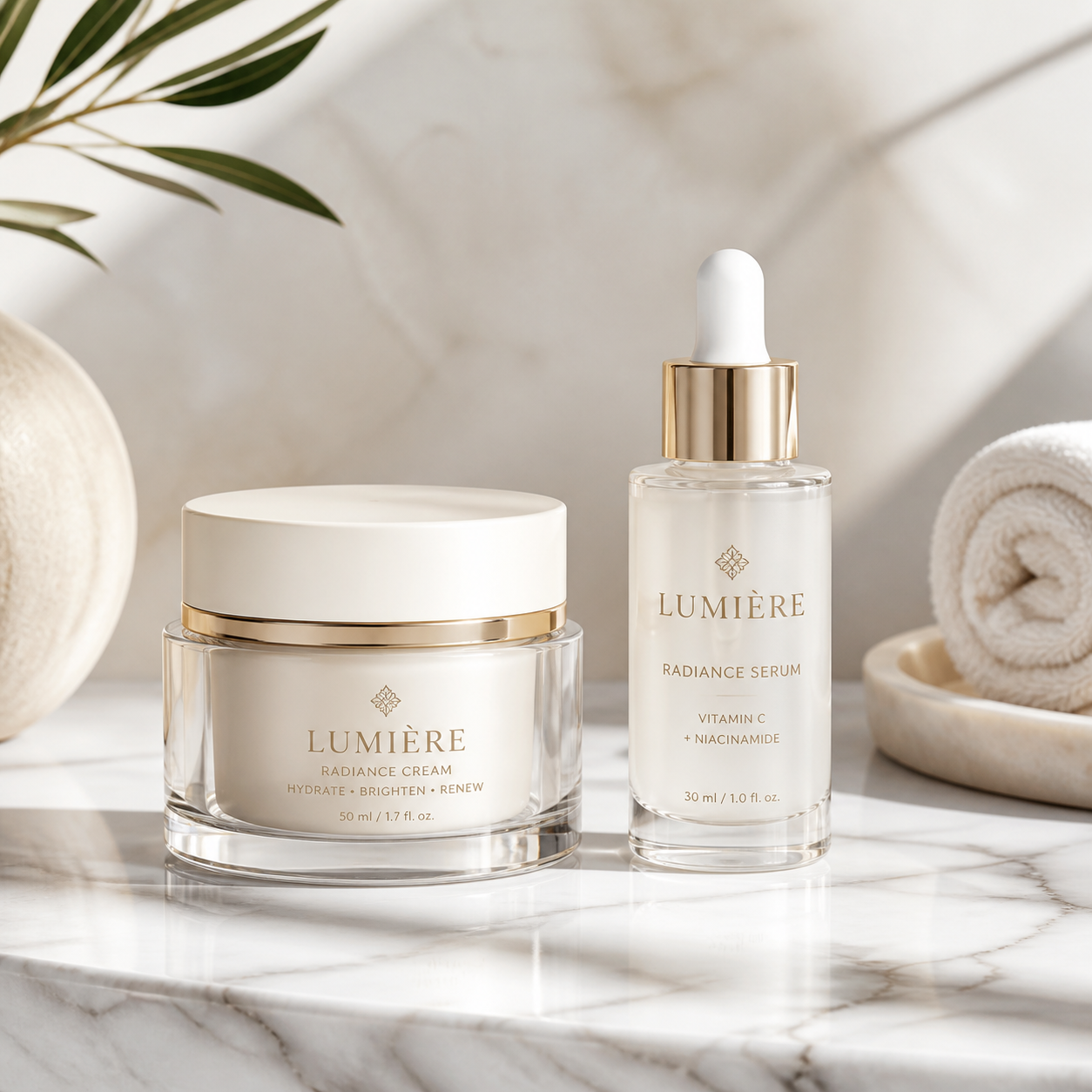
Backlighting is the foundation
Light coming from behind the bottle passes through the glass and illuminates the liquid from within — honey glows amber, wine glows ruby, oil glows gold. This single technique eliminates most glass glare because the bright source is behind the subject, not reflecting off its front surface.
Keep the backlight large and close: a window, a softbox, or an LED panel. Small bright sources create hot spots on the glass; large ones create even glow.
Light the label separately
The label lives on the front of the bottle, so backlight alone turns it dark. Add a large, soft front or side light — a window or softbox at 45 degrees — to illuminate the label without creating a visible reflection. If the label is glossy, angle the light so its reflection falls off the glass rather than straight back at the camera.
Use black cards to shape reflections
Glass mirrors whatever is in front of it — including you, your camera, and the room. Place large black cards (or black foam board) just outside the frame on both sides. The glass then reflects clean black edges, which reads as depth and premium quality, and the visible reflections become soft white strips from the lights — exactly the look commercial beverage photography uses.
If you can't avoid a reflection, polarize it
A circular polarizing filter on the lens cuts surface reflections from glass at the right angle. Rotate it while looking through the viewfinder until the glare drops. This works best when the light is at roughly 35 degrees to the glass surface — the polarization sweet spot.
Frequently asked questions
Why do my glass bottle photos have white streaks?
Those streaks are reflections of your light sources bouncing off the curved glass surface. Fix by (1) making the light source larger and softer, (2) moving it so the reflection falls off the bottle, or (3) using black cards just out of frame so the glass reflects dark edges instead of bright room objects.
How do I photograph dark wine bottles?
Dark glass absorbs light, so backlight harder: put a strong light directly behind the bottle to make the wine glow, and use a white or light background so the bottle's silhouette reads clearly. Side lights at 45 degrees reveal the bottle's shape and any embossing. A dark background with a dark bottle fails — you lose the bottle entirely.
Do I need a special lens for glass photography?
No. Glass photography is controlled by lighting, not lenses. A standard 50mm lens works; a circular polarizing filter is the only accessory that materially helps. The entire skill is positioning lights and black cards so the glass reflects only what you want it to.